
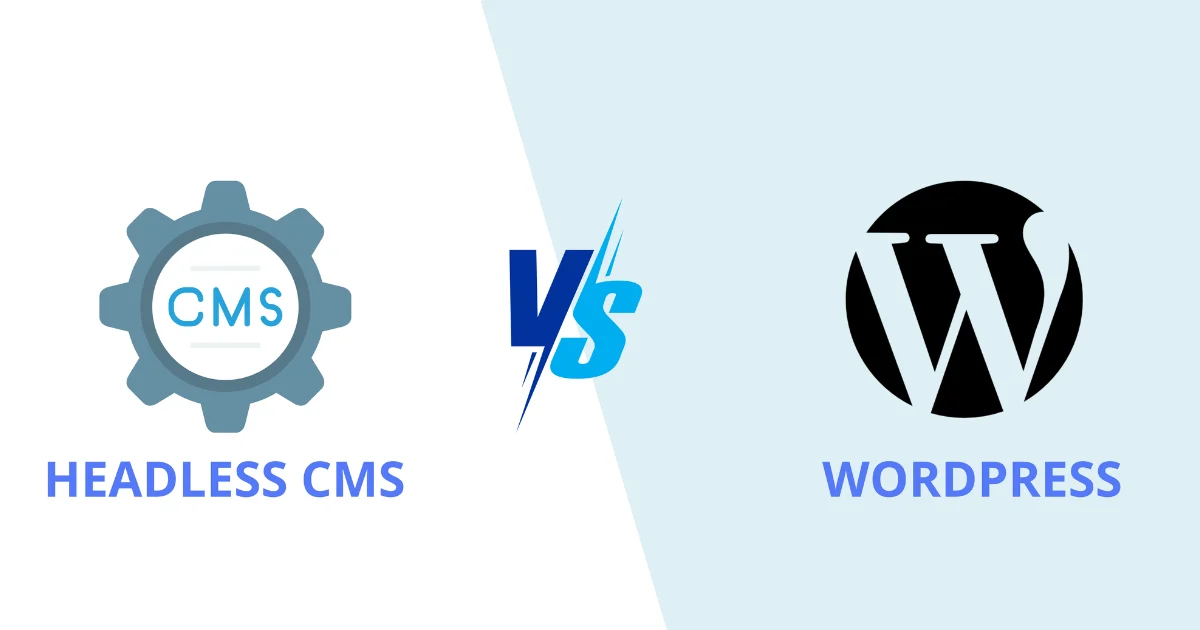
In the fast-paced Texas startup ecosystem, from the tech hubs of Austin to the corporate centers of Dallas, speed and scalability are everything. As a founder, one of the most critical decisions you’ll make is choosing the right technology stack for your website. When it comes to website management, the debate of Headless CMS vs. Traditional WordPress plays a pivotal role in determining your site’s performance, security, and your ability to scale as quickly as your ambitions. This choice will directly influence how effectively your startup adapts to rapid growth while ensuring an optimized online presence.
The central debate often comes down to two powerful options: Traditional WordPress, the world’s most popular and user-friendly Content Management System (CMS), and the Headless CMS, a modern, developer-centric architecture built for speed and flexibility.
For a high-growth Texas startup, this isn’t just a technical decision; it’s a business strategy. This guide will break down the pros and cons of each approach, helping you decide which platform will best fuel your growth.
The Short Answer: Which CMS Should Your Startup Choose?
Your choice depends on your immediate priorities, technical resources, and long-term vision.
- Choose Traditional WordPress if: Your primary goal is to launch quickly with a content-heavy site (like a blog or marketing hub). You have a non-technical team that needs to manage content easily, and your initial budget is a key consideration. It’s the fastest way to get a professional, functional website online.
- Choose a Headless CMS if: Your top priorities are blazing-fast performance, ironclad security, and the flexibility to deliver content to multiple platforms (like a website, mobile app, and IoT devices). You have access to skilled developers and are building a tech product, SaaS platform, or a high-volume e-commerce store where speed directly impacts revenue.
Understanding Traditional WordPress: The Texas Workhorse
Traditional WordPress is what most people think of when they hear “WordPress.” It’s a monolithic system, meaning the back-end (where you create and manage content) and the front-end (the visual website your visitors see) are tightly coupled together in a single package.
Pros for a Texas Startup:
- Rapid Speed to Market: With a vast ecosystem of themes and plugins, you can launch a beautiful, functional website in a fraction of the time it takes to build a custom site. For a startup needing to validate an idea quickly, this is a massive advantage.
- Lower Initial Cost: A standard WordPress site is one of the most affordable ways to get a professional web presence, with typical projects ranging from $2,500 to $7,000. This preserves precious capital for other growth activities.
- Empowers Non-Technical Teams: The user-friendly dashboard is WordPress’s superpower. Your marketing team can publish blog posts, update landing pages, and manage content without needing a developer for every small change.
- Massive Talent Pool: Finding experienced WordPress developers and agencies in Texas is straightforward, making it easy to find support when you need it.
Cons for a High-Growth Trajectory:
- Performance Bottlenecks: As your site grows and traffic spikes, a traditional WordPress site loaded with plugins can slow down, hurting user experience and SEO rankings.
- Security Vulnerabilities: Because of its popularity, WordPress is a prime target for hackers. While the core is secure, third-party plugins can often introduce vulnerabilities.
- Limited Flexibility: While highly customizable, you are ultimately working within the constraints of the WordPress framework and theme architecture. Pushing the boundaries for unique user experiences can become difficult.
Understanding Headless CMS: The Modern Powerhouse
A Headless CMS completely separates, or “decouples,” the back-end content repository from the front-end presentation layer. Your content is stored in the CMS and delivered via an API to any front-end you choose, a website built with modern frameworks like React or Vue.js, a native mobile app, a digital kiosk, or even a smart watch.
Pros for a Texas Startup:
- Elite Performance and Speed: Because the front-end is separate, it can be built using cutting-edge technology optimized for speed. This results in lightning-fast load times, which is critical for SEO and converting impatient customers.
- Omnichannel Content Delivery: This is the killer feature for ambitious tech companies. You can manage content in one place and push it seamlessly to your website, iOS app, and Android app. This is essential for creating the consistent, omnichannel experiences that modern consumers expect.
- Enhanced Security: The front-end is disconnected from the back-end database, significantly reducing the attack surface. This is a major advantage for startups in sensitive industries like FinTech or Healthcare.
- Ultimate Flexibility: Your developers are free to use the best and most modern tools to build the user experience, which can be a key factor in attracting top engineering talent in competitive markets like Austin.
Cons for a High-Growth Trajectory:
- Higher Initial Cost and Complexity: A headless build is a custom software project. It requires specialized front-end and back-end developers, leading to higher upfront costs that often start at $10,000 and can easily exceed $50,000 for complex applications.
- More Demanding on Marketing Teams: Non-technical users lose the simple “what you see is what you get” editing and live preview capabilities of traditional WordPress, which can create friction for content teams.
- Developer Dependency: Simple visual tweaks or new content modules that would be a quick plugin install on WordPress often require dedicated developer time in a headless setup.
Head-to-Head Comparison: WordPress vs. Headless
| Feature | Traditional WordPress | Headless CMS |
| Performance | Good, but can slow down with plugins and traffic. | Excellent, typically much faster and more reliable. |
| Security | Good, but requires constant vigilance (updates, plugin security). | Excellent, due to the decoupled nature reducing the attack surface. |
| Initial Cost | Lower. Ideal for bootstrapped startups. | Higher. Requires significant upfront development investment. |
| Ease of Use (Marketers) | Excellent. Very intuitive for non-technical users. | Fair to Poor. Often requires developer help for structural changes. |
| Scalability | Good for most, but can struggle under very high traffic. | Excellent. Built to handle enterprise-level traffic and complexity. |
| Flexibility | High, but within the WordPress ecosystem. | Near-infinite. Use any front-end technology for any platform. |
| Time to Market | Fast. Can launch a site in weeks. | Slower. A full custom build takes months. |
The Right Choice for YOUR Texas Startup: Three Scenarios
Let’s apply this to common startup profiles found across the Lone Star State.
Scenario 1: The Bootstrapped Content & Community Startup in Dallas
- The Business: A media platform, niche blog, or community hub focused on one of Texas’s key industries, like professional services or real estate. The primary goal is to publish high-quality content and build an audience quickly.
- The Verdict: Traditional WordPress.
- Why: Speed to market and ease of use are paramount. The founding team needs to focus on content creation, not a complex development cycle. The lower initial cost preserves cash, and the vast SEO plugin ecosystem helps them start ranking immediately.
Scenario 2: The VC-Backed SaaS Platform in Austin
- The Business: A B2B software company in the booming Austin tech scene, targeting enterprise clients in sectors like IT, AI, or Life Sciences. The product includes a marketing website and a complex web application.
- The Verdict: Headless CMS.
- Why: For a tech company, the platform is the product. Performance, security, and scalability are non-negotiable. A headless architecture allows them to build a lightning-fast marketing site and a robust web app using the best modern technology, helping them attract both high-value customers and top-tier developer talent. The higher upfront cost is a planned investment funded by their venture capital.
Scenario 3: The High-Growth E-commerce Brand in Houston
- The Business: A direct-to-consumer brand leveraging Houston’s massive logistics infrastructure to ship products nationwide. They plan to sell through their website, a mobile shopping app, and social commerce channels.
- The Verdict: Headless CMS.
- Why: In e-commerce, milliseconds matter. The superior speed of a headless setup can directly increase conversion rates. More importantly, the omnichannel capability is a perfect fit. They can manage their product catalog in a headless platform (like Shopify Plus) and deliver it seamlessly to a custom-built website and a native mobile app, creating a unified shopping experience for their customers.
The Final Word
Choosing between Traditional WordPress and a Headless CMS is a strategic decision based on your startup’s current needs and future goals. WordPress is a great choice for getting started. It’s cost-effective, user-friendly, and helps you launch quickly, allowing you to focus on finding your product-market fit. As your business grows, however, the need for performance, flexibility, and security becomes more critical, making a Headless CMS the ideal choice to scale effectively.
At Cloud Canvas Tech, we understand the unique challenges Texas startups face. We help you assess your budget, technical capabilities, and long-term vision to ensure the platform you choose supports your growth. By matching the right technology to your ambitions, you can build a digital presence that evolves with your business and sustains you as you scale.